Collaboration
London
London, October 1, 2026
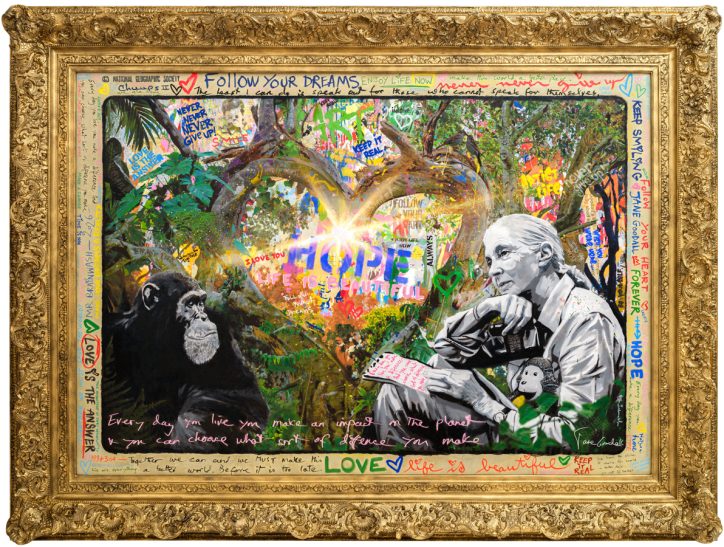
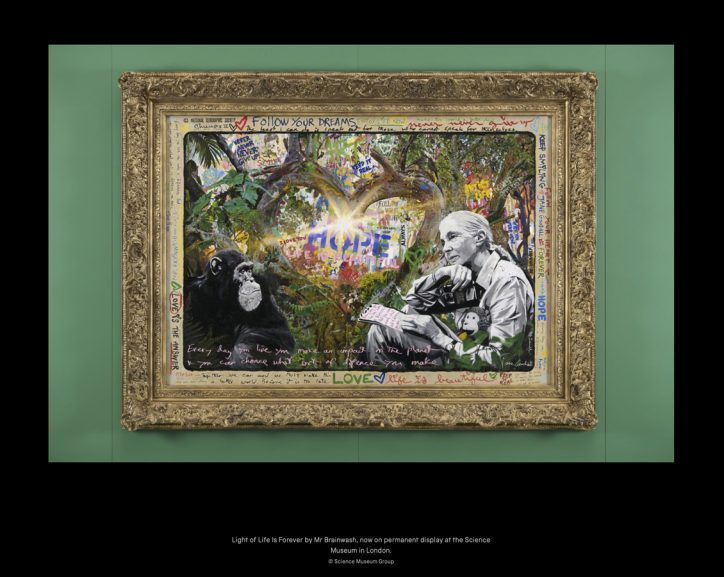
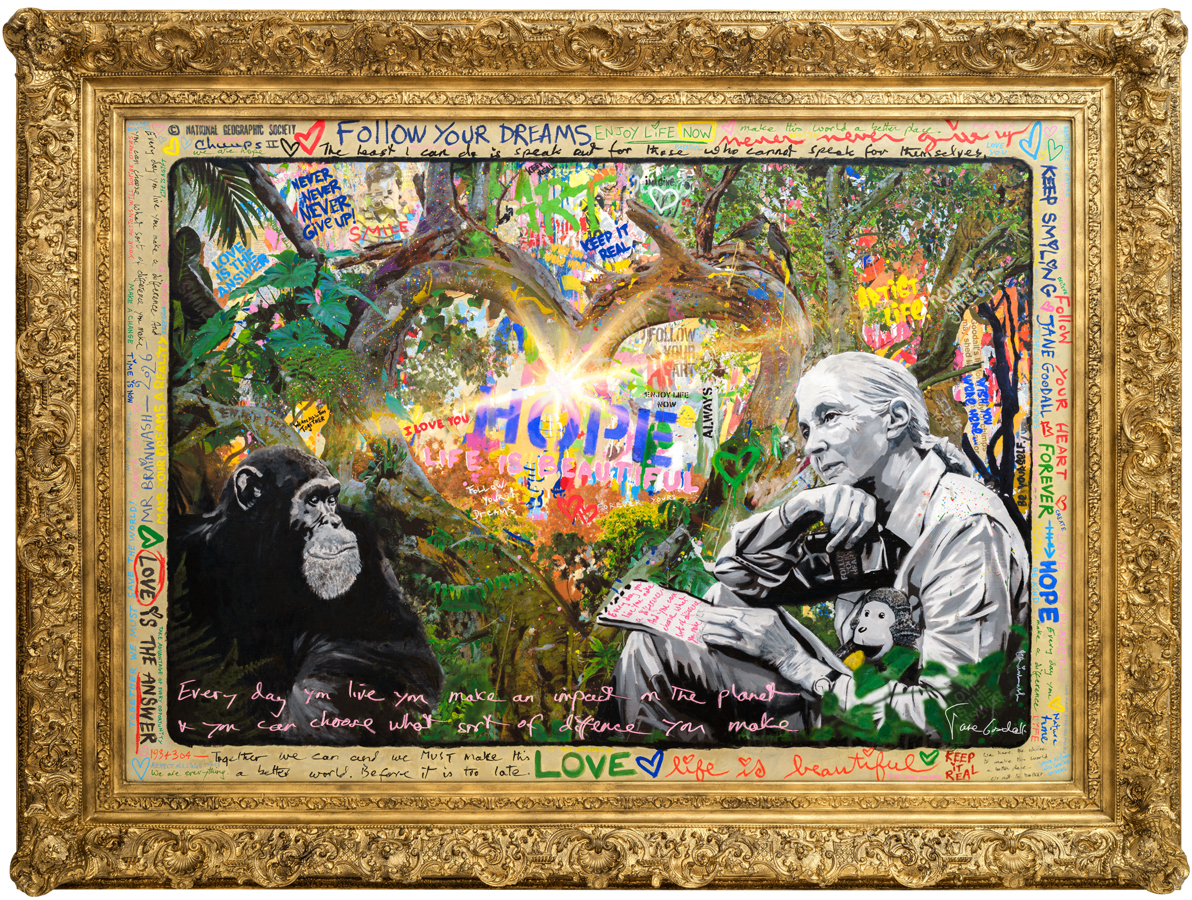
Mr Brainwash’s painting Light of Life Is Forever, a large-scale portrait honoring the life and legacy of pioneering conservationist Dr Jane Goodall, has officially joined the permanent collection of the Science Museum in London, marking a significant milestone in the artist’s career.
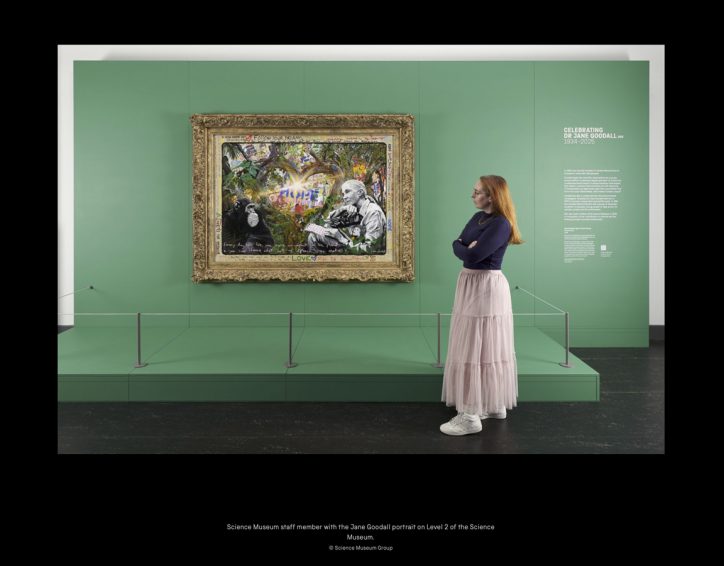
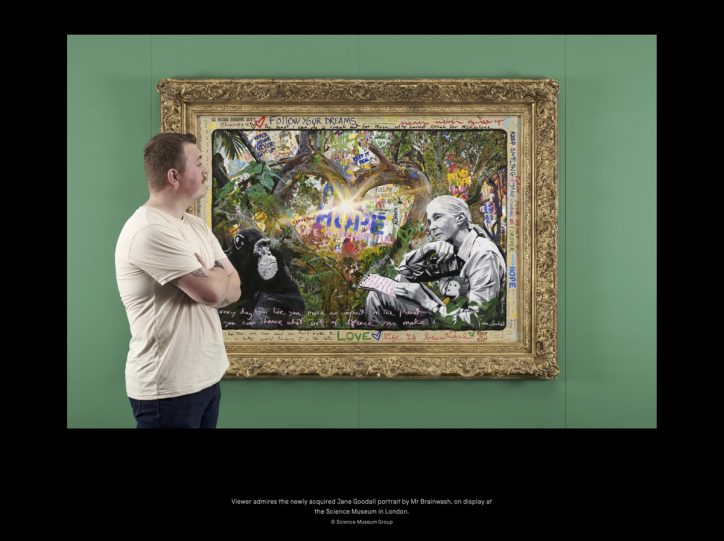
Unveiled on October 1, 2026, the first anniversary of Dr Goodall’s passing, the painting was donated to the museum by the Jane Goodall Institute UK and is now on permanent public display. Its inclusion in the Science Museum Group Collection places Mr Brainwash’s work alongside that of internationally recognized artists including Antony Gormley, Grayson Perry, and Marc Quinn.
Measuring approximately 1.5 by 2.1 meters, Light of Life Is Forever combines Mr Brainwash’s distinctive visual language of street art and Pop Art with references to Dr Goodall’s groundbreaking research. The composition depicts Goodall alongside David Greybeard, the chimpanzee whose observed use of tools helped transform scientific understanding of the natural world.
The painting also reflects a personal connection between the artist and Dr Goodall, who first met at a National Geographic Society charity event in Toronto. Their encounter inspired Mr Brainwash to create a series of portraits celebrating her extraordinary contributions to science, conservation, and environmental advocacy.
Reflecting on her legacy, Mr Brainwash shared:
“Jane showed the world that one person can make a difference. She gave us hope, but more importantly, she showed us what it means to turn that hope into action.”
The acquisition represents an important moment in Mr Brainwash’s artistic career, connecting contemporary art with the histories of science and conservation. Now part of the Science Museum’s permanent collection, Light of Life Is Forever stands as a lasting tribute to Jane Goodall’s achievements and her enduring message of hope, compassion, and responsibility toward the natural world.
Light of Life Is Forever is on permanent display on Level 2 of the Science Museum in London.